Notes and observations for October
I'll start this post with observations from three recent activities: a panel discussion led by a veteran Chicago environmental justice leader, a table discussion at a collective impact meeting, and insights from work-in-progress on the first issue of a (planned) biannual local environmental equity publication. I'll end with some notes on where things might go, fueled by a new role for me.
Little Village Environmental Justice Organization
Kim Wasserman, the former executive director of the Little Village Environmental Justice Organization, was featured speaker at an event hosted by the NAACP of Evanston.
Little Village - also known as South Lawndale - is a predominately Latino community on Chicago's southwest side. That makes is a more homogeneous than Evanston, but I still want to start out with a few comparisons.
- Little Village has total population of about 68,000 people, of which 56,000 identify as Latino (82%) and 12% Black. Evanston's population is about 76,000, of which about 60% identify as White, 14% as Black, 12% as Latino, 9% as Asian.
- Little Village is roughly 4.5 square miles in size. Evanston is 7.8 square miles.
- Median household income in Little Village is $42,000, in Evanston it is $96,000.
Evanston is slightly less dense, more White, and wealthier. But in general we're talking about two physical and population landscapes that are pretty similar.
Ok. I know that's a very big oversimplification. Every resident in Little Village is more directly impacted by environmental inequities than are residents of Evanston, where inequities are concentrated in two sections of the city and large sections of the city can simply ignore those conditions.
But stay with me. Because one of the things that struck me about Wasserman's talk and stories was the scope and scale of real outcomes within the physical landscape of Little Village. It speaks to what is possible. A community-level example of positive deviance, where folks do better than others with the same (or more limited) resources.
The Little Village Environmental Justice Organization has, for example, organized direct community support and legislative action to address a contaminated channel that runs through the neighborhood, replace lead-pipe water-service lines, mitigate urban flooding and ensure residential utility service remains affordable. Citizens are actively monitoring air quality and a joint effort with the Chicago Department of Public Health and the University of Illinois Chicago tracks truck traffic (a known source of air pollution) in the community. They are working to enact local ordinances that will ensure more responsible development, breaking a cycle of industry needs taking precedence over community interests.
Also interesting to me is the work in food justice. Two former industrial sites - one a Superfund site, the other an abandoned industrial site - now together grow thousands of pounds of organic produce and harvest hundreds of dozens of fresh eggs each year. All of it is distributed free to the community, some of it in direct home delivery. The sites are also support community and cultural enrichment by tapping into the deep heritage of farming and food production among the Latino residents.
All of this took years of organizing and political work (Wasserman's efforts began in the 1990s). But it points to what is possible.
The low-income/wealth proximity advantage
A few weeks after the panel discussion, I attended a quarterly meeting of Evanston Cradle-to-Career, a collective-impact organization that brings together many social and civic organizations to address structural challenges in the city. There will be much more to write about the efforts of this organization and environmental justice work in the future, but I wanted to document a few moments of conversation during that meeting.
The meeting brought together more than 50 leaders from across Evanston. Community organizations, non-profits, civic groups, and business leaders. I sat at a table with my environmental justice colleagues, Janet Alexander-Davis and Jerri Garl. We were joined by three leaders from outside Evanston; members of the Far South Side Chicago Coalition. They attended as part of the United Way of Metro Chicago's network of collective impact organizations. And they said they were here to just see and understand what was going on in Evanston.
What a stroke of luck for Janet, Jerri and me.
The keynote speaker of the meeting was Sean Garrett, President and CEO of the Chicago United Way organization. Garrett noted that Evanston presented at least one unique element in his assessment: While we have very disparate income and living circumstances across the city - and all the challenges that come with the low end of that disparity - we are all in close proximity to each other.
The leaders of the Far South Side Chicago Coalition included Amina Brooks (who leads the Coalition) and Pauline Sylvan-Lewis, who leads People Empowering People in Chicago.
Both Brooks and Sylvan-Lewis echoed Garrett's insight about proximity. The Far South Side is comprised of 13 different communities - historically Black and low income - and it spans about 20 square miles (3 times the size of Evanston).
They looked around the meeting room. "You are all right here, together," noted Brooks. We all work in Evanston community organizations but we also live here, she added. Some of the not-for-profit organizations supporting the far south side have leaders who do not live in any of the area's communities. They go home to a different environment each night.
And that has an impact on one of the biggest challenges in Coalition building and collective impact efforts: Trust among all involved. We spoke a great deal with the two leaders about their work in developing and maintaining community trust, and the effort it takes to build authentic, caring relationships.
Caring relationships and proximity.
What I am beginning to understand from the work I have been doing over the past year+ is that attention, and care, is as unevenly distributed across the neighborhoods of Evanston as are the environmental resources and burdens each neighborhood carries. Residents in the wealthy, whiter neighborhoods can get whipped up into a frenzy of attention, collective action and emotion about potential zoning changes impacting the future of their large, single-family-home lots. But, from those same community members, do we see that attention, collective action and emotion about structural issues that contribute to our more racially diverse communities having expected life spans that are 8+ years less than more privileged areas? Uh, no.
Therein lies, I think, the crux of the challenge in turning proximity into the positive opportunity recognized by Garrett, Brooks and Sylvan-Lewis.
We need to broaden the care, so that it is felt equally across the city.
Lessons from a publication-in-progress
The project to create a 2x/year publication is underway. It is now officially the Environmental Equity Update from the Evanston Environmental Justice Coalition.
We are in the messy middle of the project. Our goal is to publish just after the new year, meaning we'll have all the content in final form and built into a publication during December. To date we have a lot of draft content underway.
But I'm seeing small signs of how the activity of producing a publication is having positive affects. A new team of volunteers is now engaged in environmental equity efforts (some very talented editors and writers). As we reach out to Coalition members to document their project wins in 2026, folks are openly sharing their stories and enthusiastic about the knowledge-sharing potential of the publication. And the word is spreading; a key city staffer, who was not part of our publication team's outreach, said to me when we met at a recent meeting "Oh, I've heard about the publication you are doing."
A key as we transition out of the messy middle is to keep focus on the outcome we laid out at the beginning of the project: As a result of content in the first issue, Coalition organizations generate specific new actions in 2027 that align with recommendations from the city's Environmental Equity Investigation (EEI).
EEI recommendations cover a broad range of issues, so finding footing in one or more of the areas is not a challenge. What is an opportunity is how Coalition members may collectively work toward improving outcomes in one of more of those areas. Right now it's a collective of independent organizations who are only somewhat aware of what each is doing, and where there may be opportunities to combine talents, networks and expertise.
The publication team has an open item to design: A decision-making tool to support Coalition members in their efforts to align some activities with EEI for 2027. This will be an interesting - but I sense important - design challenge. One where we will need to figure out how we test our assumptions about what might work as we build the tool.
A new role. And where things might go.
Earlier this month I officially stepped into the role of co-chair of Environmental Justice Evanston (EJE), with Janet Alexander Davis. That role also means I am taking on some additional program management tasks, as the program lead for environmental justice at Climate Action Evanston.
This came about as part of a long series of conversations with Janet, Jerri Garl and long-time EJE member Hank Neuberger about transitions. Janet - the 83-year-old civil rights and environmental justice leader - is still the heart and spirit of the movement. Jerri - Janet's co-conspirator for years, and also a legend in the city - remains actively part of the organization but will focus more time on policy and science (she had a long career at the EPA). Hank is a get-it-done leader (he comes from years spent in music production), well connected advocate who knows all the history of the movement in Evanston.
What I am adding to the mix (I hope) is some skill in building structures where people might exercise their talents in more collective effort. And what I am grateful for is having met three folks who are balance wisdom and curiosity.
So what's next? Not sure. But our conversations center on three big themes:
- Continuing to not just engage the community, but find ways to give it more power.
- Getting more folks involved in leadership from the two communities identified as the outliers in terms of environmental equity - one on the west side, one on the south of the city.
- Data. We need to develop ways to collect and organize data that can inform the decisions and actions of the community. (See the section about Little Village, above).
Looking forward to this journey.
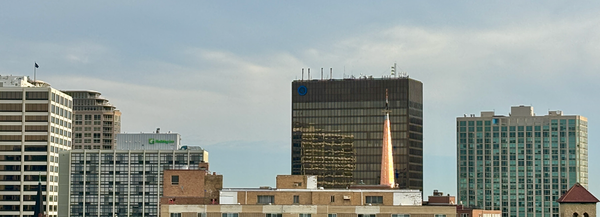
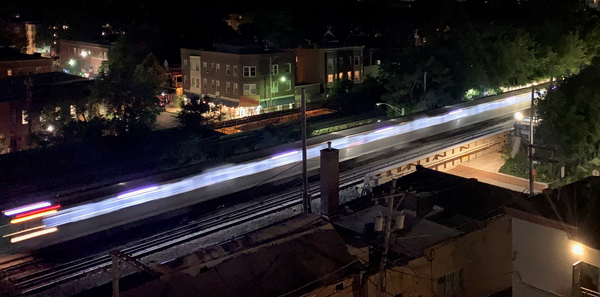
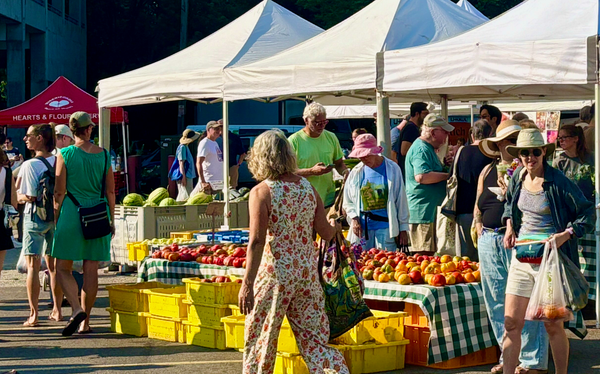
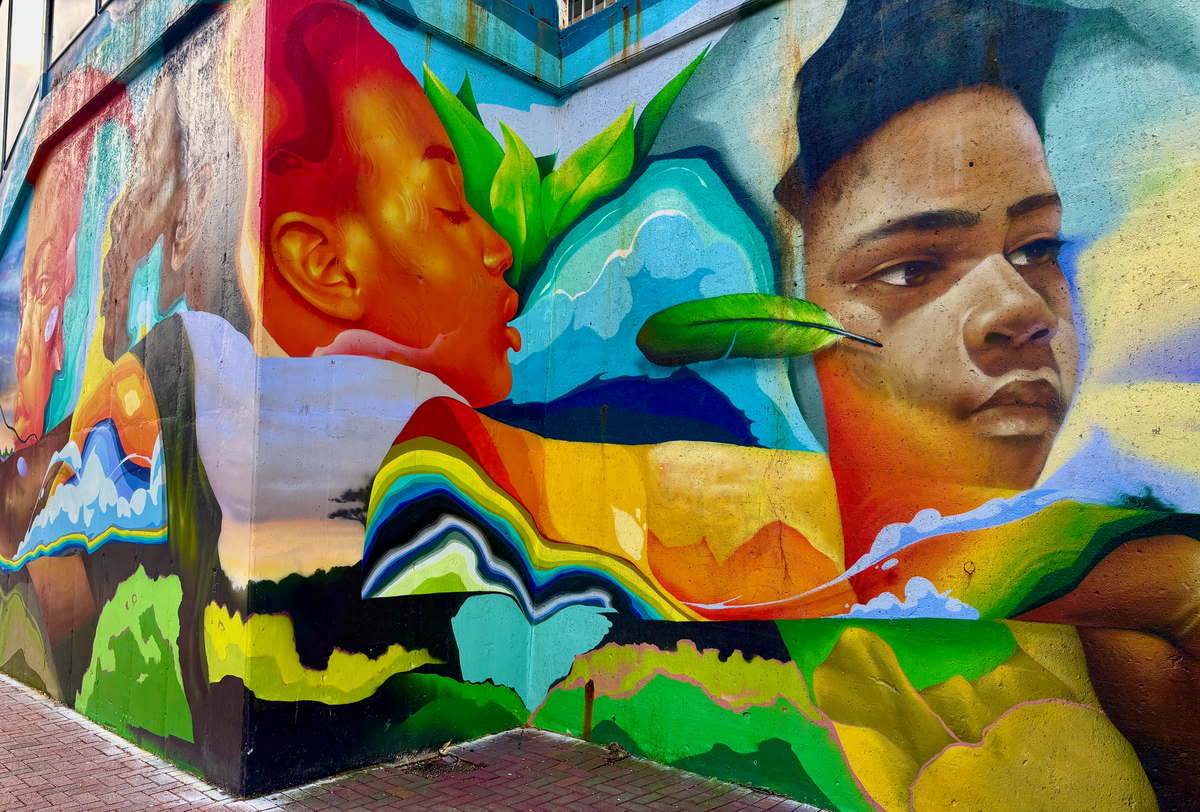
The photographs which accompany these posts are taken by me, and show different settings and views of Evanston (where I live). It is a visual reminder that this is the most important setting for belonging and contributing to community: our neighborhoods, our cities.
Jeff Merrell - Community Listening © 2026 by Jeff Merrell is licensed under CC BY-NC 4.0