Can a biannual publication nudge continuous community listening?
On July 14, I officially opened a project for the Evanston Environmental Justice Coalition: Producing the first edition of a new biannual publication on the state of environmental justice in Evanston. The start-up edition project will take 3 months beginning in September.
The publication I envision should have voice - more a Zine than a report - and clearly acknowledge that each issue's content captures a moment in time on a long journey. It is also intended to be a collaborative effort, bringing together a network of volunteers and organizations to produce it and to guide its direction.
And there are design choices to make that are not lost on me. Voice - who's voice - matters.
How I got to this project - really, an experiment - started with some interviews I did in late June after writing Everything is a listening problem. The opportunity I faced was trying to help the Coalition move Evanston's Environmental Equity Investigation (EEI) recommendations from ideas into active solutions.
EEI's more than 30 recommendations identify many potential solutions - some big, some small - to address the overarching outcome of reducing the environmental inequity evident in two specific sections in the city. These sections - on the west side of the city, and on the south bordering Chicago - carry a greater exposure to potential environmental harms and less access to environmental assets (greenery, open spaces, walkable neighborhoods, etc.) compared to other (whiter, wealthier) sections of the city.
The recommendations are not really organized into a strategy to solve the problem of environmental inequity. They are good, free-floating ideas that will move the needle. It presents a knotty problem: It's good to find ways to take action, but how do we know if we are making progress against the real problem of environmental equity? And the activities, really, need to be genuine collaboration between the city, local organizations and citizens.
So I started by going listening. I started with volunteer organizations (members of the EJ Coalition) and city staff as I know less about those stakeholders than I do folks who live in the neighborhoods. What I was listening for was how they make sense of something like EEI and what they actually do in similar efforts. Not what they say they do or will do, but what they actually do or have done.
Here's what I heard from my conversations with EJ Coalition members.
- Member organizations are familiar with EEI. But no one is explicitly looking across its 30+ recommended actions to decide which they may take on. "We could use some guidance."
- They all are bound by governance routines to ensure that activities are aligned with their organization's mission, capabilities and guiding principles. These create deeply embedded processes and culture. "We need to stay in our lane," and "we don't want to reinvent the wheel."
- Still: They are actively engaged in actions that align precisely with specific EEI recommended actions. But few had made the connection.
- They are also all routinely engaged in a broad range of community outreach activities that clearly offer opportunities as community listening moments to gain insight about the way folks think about the environment, sustainability and their own neighborhood or personal lived experiences. But these insights live in organizational silos (a not unfamiliar pattern).
The city - for its part - is putting in an effort to review EEI recommended actions as part of routine director-level staff meetings. The review is focused this year on looking at where staff are already doing work that aligns with the recommendations. It is being tracked by a senior leader and members of the city's sustainability staff.
When I unpack this, it's a classic knowledge-sharing problem. Folks don't have visibility on what other folks are doing. And so we're all creating meaning in our own little networks rather than together. Making meaning together requires some space to breathe; creating and producing a publication can create that space.
The publication, as proposed, will focus on addressing four questions related to EEI recommendations and environmental equity in general:
What do we hear the community telling us, in relation to EEI topics? Member organizations of the Environmental Coalition already listen to the neighborhoods through 1x1 outreach conversations, meetings and generating data. If we looked across these listening points, how might we synthesize what we are hearing? What stories emerge?
Where is the Environmental Coalition already doing work that supports or aligns with EEI recommended actions? The Coalition is already doing good work in some of these areas. What else are we already doing that we might acknowledge? What outcomes/results are we seeing from these efforts? What are we learning?
What is the current state of the City of Evanston efforts related to EEI recommendations? City staff are also beginning to track their work against EEI's recommended actions. Where are they making progress? What are they learning?
Where are there gaps and opportunities to address? Answering the first three questions will undoubtedly expose gaps and point to opportunities to address. Part of the publication routine might include having a panel of Coalition experts look across the answers and identify those gaps and opportunities. For example: How might Coalition members collaborate to better aggregate insights from community listening activities? Find new ways to work together on EEI aligned programs or listening efforts? Organize efforts to address action recommendations that are not currently being addressed? Any new effort to address opportunities must be done within the existing routines and practices guiding the member organizations; they must make and guide their own decisions.
This is what I mean by using a publication to create breathing space for making sense of the current environmental equity landscape in Evanston. It's answering questions, reflecting on what the answers to those questions mean, and making those insights explicit and visible. That's the knowledge-sharing model.
But what's on my mind at the moment is designing a space - a publication - that centers the voices of folks in the neighborhoods. All spaces are designed and all design is about making choices.
This came home to me through two moments.
First was a moment with my colleague and environmental justice mentor Janet Alexander Davis. When we were reviewing the reasons behind why this publication might make sense, at this moment, Janet observed that the environmental equity investigation was really a year-long community listening event. That comment stuck with me.
What I think she was getting at was that the way the investigation was structured was a very sincere attempt to listen to the community in ways that are not typical in Evanston. Folks really had an opportunity to think and engage together. It was not some one-minute public-comment moment in front of the City Council or other town-hall type meeting.
But now the project is over and that level of energy around sincere community listening has gone away.
The second moment was today, after attending a screening of the movie
A Tree Story - Gullah/Geechee Roots and Resilience. It is an amazing story about people, culture, community, and deep kinship with the land. And especially with one ancient oak, representative of many other trees that are viewed literally as ancestors. The community in the movie, against odds, finds a path to preserve that culture and that land against forces that move to take it all away in the name of economic development.
The moment that struck me came after the screening when there was an opportunity to speak with the movie's creator and director. One observant audience member noted how the 20-minute movie did not include officials from the local government, concentrating entirely on local citizen voices, and asked the director about that choice.
The director's answer clarified that the choice was explicit. This was a story that centered on a tree, people, and their deep relationship with the land. Those voices were what mattered.
Which brings me back to the publication. Who is included and how they are included is a design choice. Just like the director's.
So I'm thinking: What might that look like? And how might that choice lead to nudging more work to do that kind of deep community listening that Janet valued, and that came to life in A Tree Story - Gullah/Geechee Roots and Resilience?
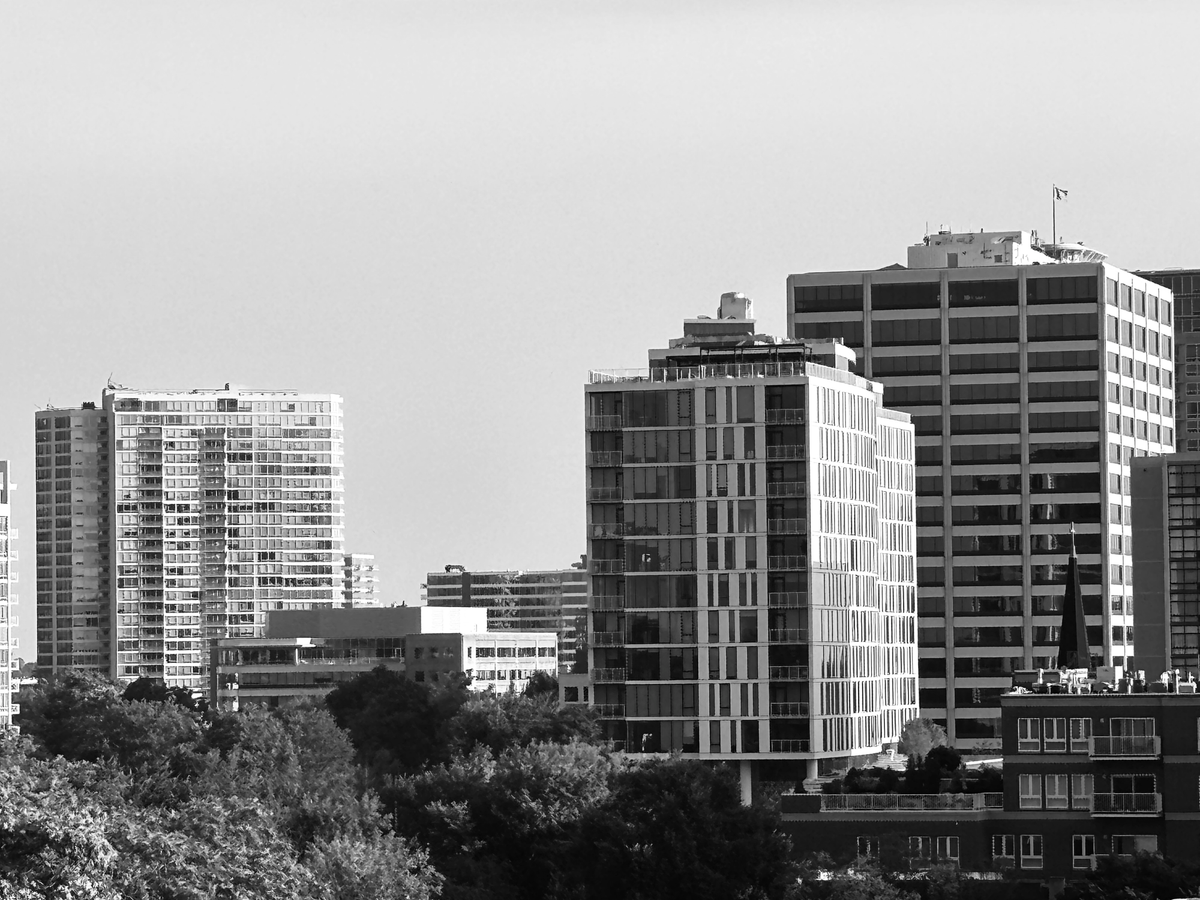
The photographs which accompany these posts are taken by me, and show different settings and views of Evanston (where I live). It is a visual reminder that this is the most important setting for belonging and contributing to community: our neighborhoods, our cities.
Jeff Merrell - Community Listening © 2026 by Jeff Merrell is licensed under CC BY-NC 4.0