On listening

When I started this journey I defined community listening as three elements;
- How a group facilitates listening to the community members it serves.
- How a group helps community members make sense of what it is learning.
- How a group facilitates co-creating solutions with the community members it serves.
One of the things I experienced about that first bullet - facilitating listening - is how folks tend to think of it as "we need to have a community meeting." Or some gathering that brings the community together.
Those events are cool. And precious. Precious because an event depends on folks being able to attend. And that means many folks are excluded. And those who do attend are bound by the elements of the event design.
So a key question is: How might we expand the range of our listening activities to include more folks? One way is to think about "listening" more broadly.
It's group events. It's data. It's 1x1 conversations.
It's any moment when you get a moment with another human to understand their thinking at that moment.
When you expand the range of listening activities to include all of those moments, you shift the challenge from "how do we create the precious, cool moments?" to "how do we make sense of all the moments we already have?"
Here are some examples. In my current work with folks who do environmental justice, there exist many moments where there is an opportunity to learn from citizens about their lived experiences, through small interactions or bits of data.
A group of volunteers are doing door-to-door outreach to inspire more tree planting. That's a lot of individual conversations about how folks think about greenery and its impact on their neighborhood experience.
Another group has sponsored a program that allows folks to check out an air quality monitor from the public library to assess their neighborhood air quality. There's a lot of potential insight there. Who checks it out, where do they live, why did they choose to make that decision, what data did they collect, what did they do as a result of the data they gathered, how that data aggregates to paint a picture of local trends, etc. But even low-hanging bits of data tell you something: How many have been checked out? How often? In what parts of the city?
Another group is working with folks in low-income neighborhoods to help facilitate their move to solar as an alternative energy source. Again - a lot of deep insight into folks' thinking, their lived experiences and their decision making as they go through the process.
There are also many one-off community gatherings (panel discussions, events, meetings) and surveys or questionnaires that add to the mix.
When you start to look around, you see many moments like this.
That's not to minimize the importance of focused gatherings. But it does help us see beyond the "we need to gather folks together, in a meeting" mindset.
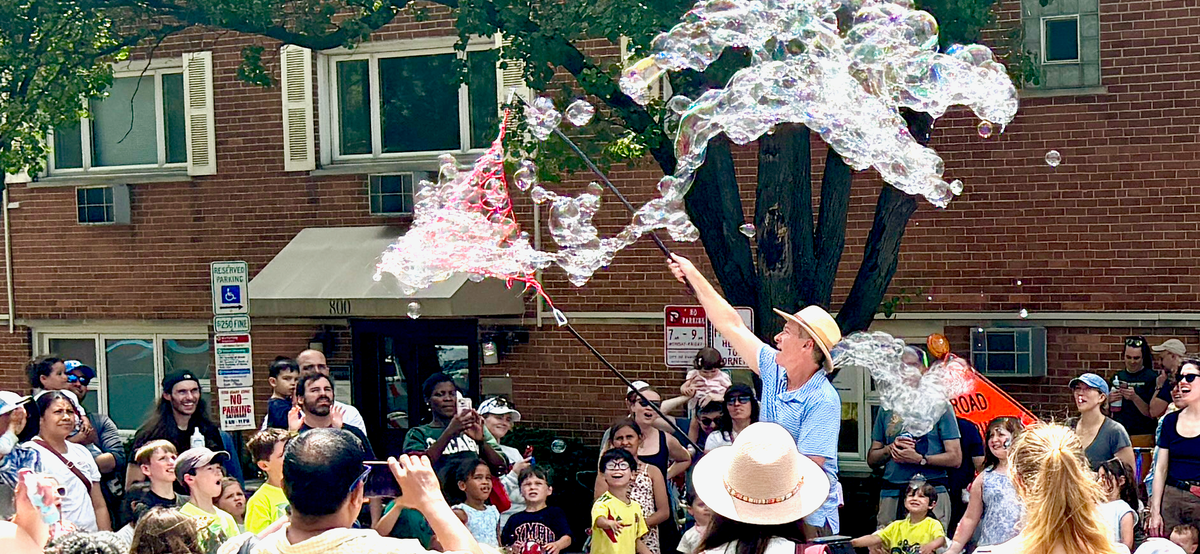
The photographs which accompany these posts are taken by me, and show different settings and views of Evanston (where I live). It is a visual reminder that this is the most important setting for belonging and contributing to community: our neighborhoods, our cities.
Jeff Merrell - Community Listening © 2026 by Jeff Merrell is licensed under CC BY-NC 4.0