Environmental equity and climate resilience roadmap

Build community connections and power.
Grow more trees, plants and food.
Nurture parks and open spaces.
Make transit options green, safe and accessible.
Invest in affordable, sustainable housing.
Eliminate man-made environmental hazards.
Reduce waste, increase reuse and sharing.
Design severe weather safeguards.
These draft statements are designed to define long-term outcomes to address equitable climate resilience in Evanston. It's a bit of a word-smithing exercise that I am doing to create a roadmap for the very local efforts here, drawing themes from existing city plans that cover climate resilience and environmental equity.
I am trying for language that accomplishes a few things.
- It's active, pointing to long-term action.
- It's clear, jargon-light and makes sense to the general community.
- Folks who are deep into climate policy and advocacy can see where their work fits in it.
- It creates distinct categories, under which we can track actual efforts (programs and policies) and their impacts.
I started by leveraging great work already synthesized in three documents. Two are major Evanston environmental plans: the Environmental Equity Investigation (EEI) final report and the Climate Action Resilience Plan (CARP). The third was the Sustainable Mile Handbook, a visionary and inspiring resource developed by the Chicago environmental justice organization Blacks in Green. Each addresses climate resilience and equity (although at different levels of emphasis) and are focused on what that looks like at the community and neighborhood level.
The draft statements describe directional outcomes specifically targeted at two sections of the city identified by the EEI effort: neighborhoods on the west side and along the southern end of Evanston (bordering the Rogers Park neighborhood of Chicago).
These two areas became the focus areas of environmental justice for EEI researchers. The population is lower income; the sections are home to a greater percentage of Evanston's Black and Brown communities; residents have lower overall life expectancy than the wealthier, whiter sections of the city; and the areas carry a greater burden of risk from environmental hazards (pollution, noise, etc.) and have access to fewer environmental assets (tree canopy, parks, walkability, etc.) compared to other sections of the city.
While these outcome statements ring true for any community area, they ring true differently for the environmental justice focus areas in Evanston. Some of it requires resolving existing (and preventing future) inequities. Some of it requires joining in behavior and consumption changes that we all must face, no matter what neighborhood we live in.
Here's a high-level draft overview of each outcome. A lot can be added in each - and that is work that will be done in collaboration with others who know each of these topics more deeply.
Build community connections and power. This is where it all must start. The other outcomes are meaningful only if they are guided by the decision-making and creative collaboration in the local neighborhoods - the absence of which led to the history of injustices and inequity we live with today. This outcome focuses us on the opportunities to build and support new structures: block clubs, local networks, and collaborative engagement and decision-making with city staff and leaders. But it also adds a community-connections lens to activities and approaches we might use in addressing the other outcomes. Community sharing, repair and reuse activities, for example, not only address efforts to reduce waste, but build more connections across the community. How might we design-in more opportunities for connection and strengthening relationships across all of our efforts?
Grow more trees, plants and food. Greenery in both public and private spaces offer multiple environmental and neighborhood health benefits: temperature regulation, air quality improvement, and storm water management among them. Growing food in community or home gardens, or harvested from fruit-bearing trees, offers opportunities to create additional food sources and community building through gardening activities and sharing harvests.
Nurture parks and open spaces. Public parks offer the opportunity for the community to connect, gather or simply find peace in green, natural environments. How they are nurtured - designed and maintained - makes an impact on the quality of both the community connection and natural experience. We can also look beyond formal public parks to find more opportunities to create open, green spaces - in commercial areas, along streets - for the community to enjoy and to grow more trees, plants or food.
Make transit options green, safe and accessible. Transit touches nearly every moment of our daily experience. Not just how we move around, but also through the impact of how goods and material are moved around. More green, safe and accessible options moves us away from our current car-centered culture; robust public transit, walkable neighborhoods, and protected bike lanes among them. If cars are necessary, let them be EVs, with infrastructure to support them. Moving goods and material differently means - in the short term - designing different ways to route truck traffic to reduce the harmful impact of air pollution and noise affecting EJ focus areas.
Invest in affordable, sustainable housing. Investing means making future-focused decisions about how we upgrade or repurpose existing housing, or build new. Evanston's vision of creating healthy buildings using renewable energy should be done in concert with its vision to increase affordability for both current and future residents. "Sustainable" bridges both visions; healthy, green homes without gentrification, giving residents opportunity to sustain their place in the community throughout their life stages.
Eliminate man-made environmental hazards. The environmental justice movement exists in large part because of this issue. In Chicago, Hazel Johnson led the work to connect the industrial pollution to negative health impacts borne by lower-income, Black communities. When you look closely at Evanston, you see the same dynamics at work; the Church Street waste transfer station, the location of light industry, and truck routes all creating a cumulative impact on lower-income, Black and Brown communities. These hazards exist by decision and design, through zoning and regulations. As we learn more and recognize cumulative health impacts we can focus on elimination of these man-made hazards.
Reduce waste, increase reuse and sharing. The services that the city provides to collect, recycle and manage waste must be equitable and effective across neighborhoods and the diversity of housing (single family and multi-unit). But the Roadmap for a Circular Evanston outlines a more ambitious vision: to move equitably toward zero waste and a circular local economy as part of the city's larger climate resilience plans. It includes detailed actions and measures to make progress on this vision, including an explicit effort to depart from past practices by centering the needs and interests of lower-income, Black and Brown communities. Importantly, the roadmap addresses the underlying, necessary shift from our consumption economy to one centered on sharing and reuse. These changes contribute to the very local connections among neighbors in neighborhoods, and the diversity of ways in which this may take place.
Design severe weather safeguards. Extreme heat and cold, more flooding from stormwater, damage to homes and businesses by high winds, and storm-related power outages. These impact the entire community and are increasing in intensity and frequency. But they land differently in lower-income neighborhoods. We can proactively address this by designing safeguards that incorporate both natural resources and alternatives to standard concrete or traditional ways of building our infrastructure. We might also design improved response and repair systems to address the greater physical and economic impacts on the most vulnerable populations in the city.
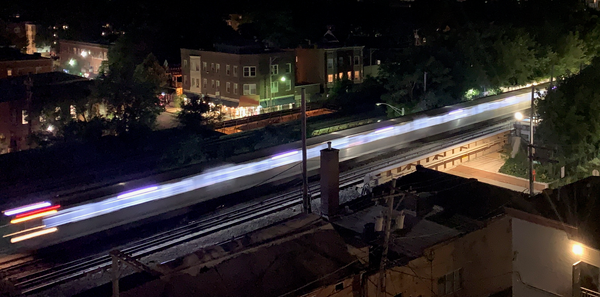
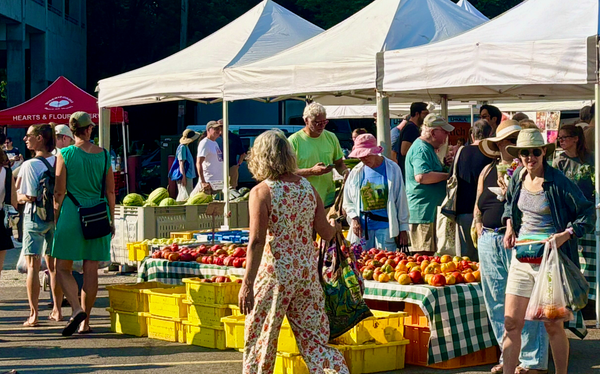
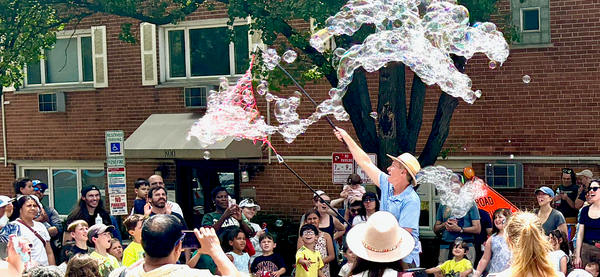
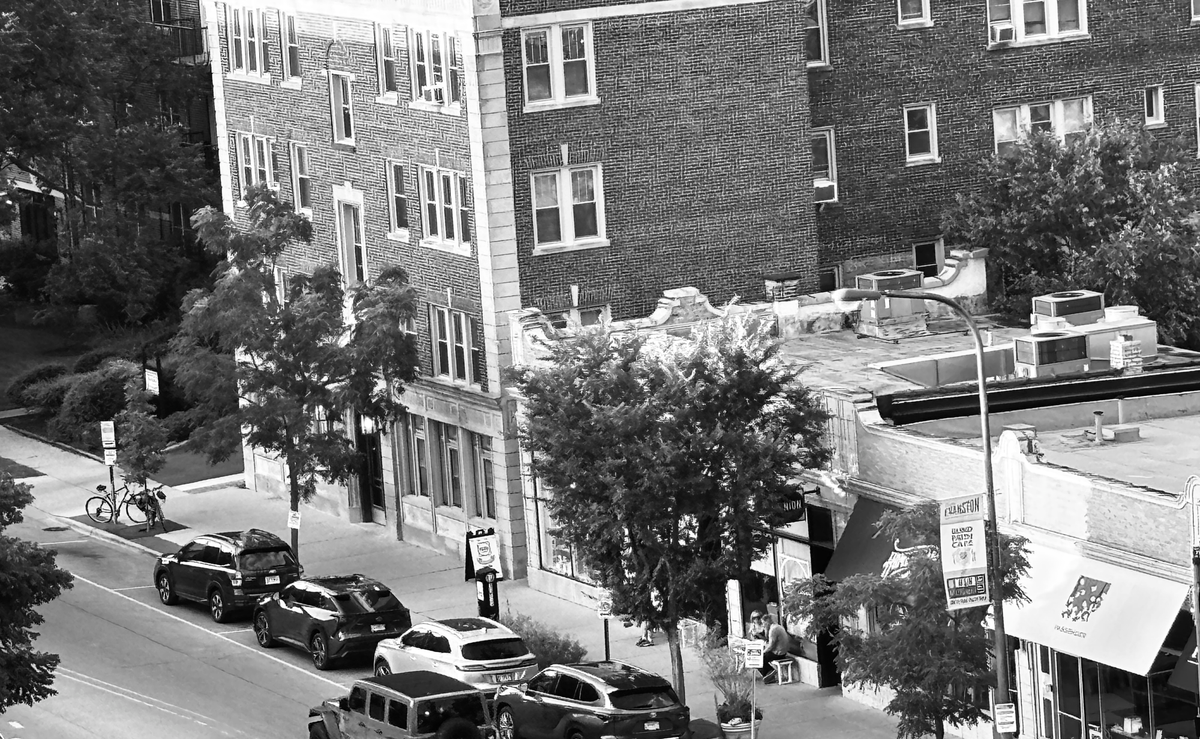
The photographs which accompany these posts are taken by me, and show different settings and views of Evanston (where I live). It is a visual reminder that this is the most important setting for belonging and contributing to community: our neighborhoods, our cities.
Jeff Merrell - Community Listening © 2026 by Jeff Merrell is licensed under CC BY-NC 4.0