Education to advocacy. Reflections on #etmooc

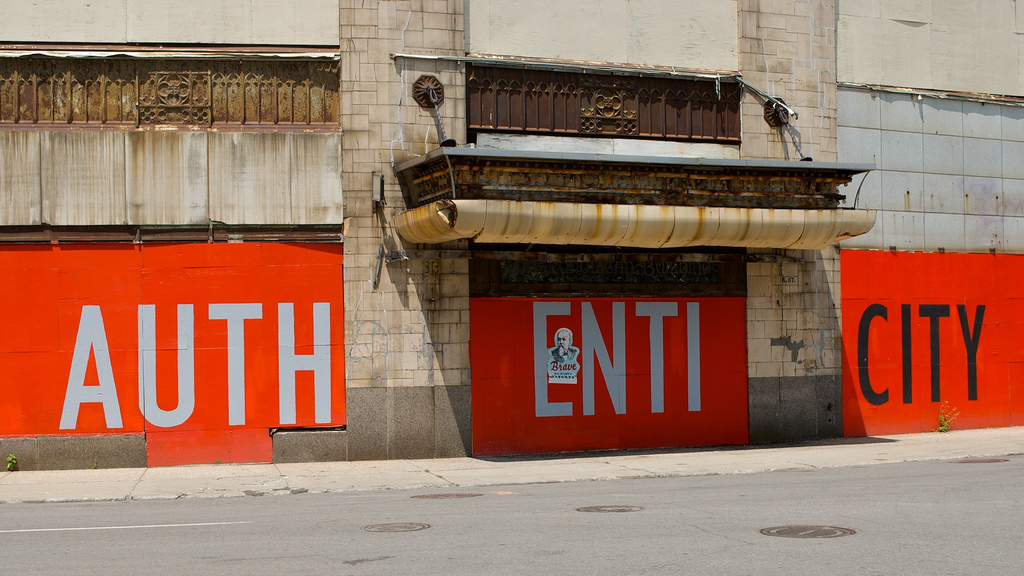
I want to reflect on two aspects of #etmooc: The experience of it and also the questions I am left pondering as I transition to some post-etmooc state. I am happy that this is part of my visible digital self. But truthfully, I am writing this for myself.
Some context first. etmooc started at the same time that the academic quarter begins at Northwestern University, where in winter I teach a graduate course called Creating & Sharing Knowledge (#msloc430 if you want to follow us) which is really about within-organization technology and collaboration (think Enterprise 2.0). I also co-teach another course in winter in which teams of graduate students tackle a real 6-month project for an organization. It is very much a problem-based learning course in which there is no real "lecture" element (hooray!) but instead a lot of doing. Picture it as a consulting engagement using design thinking as an underlying approach to the organizational problem.
So during this time period I'm thinking a lot about technology, collaboration, and learners finding their way through complex, ambiguous situations (the project course).
I have been teaching these courses for 5 years - my first gig in teaching. So I am a novice. I love what I do. I am lucky that my students are all wickedly smart, motivated, good people. And luckier still that none of my students are going through puberty or need to be reminded to wipe their noses.
But in any case: Playing a role in helping people learn is one of the most rewarding career gigs you can have.
The experience of etmooc
I look back at my blog posts here and realize how long it's been since writing. But it doesn't feel like it's been as long as it has, in fact. Why is that?
Certainly my experiences with MOOCs (this is #3) makes me a bit more comfortable with flowing in and out, as well as taking advantage of the different forms of live and asynchronous participation: blogging, Twitter, Google communities, etc. The design of etmooc fostered a great deal of flexibility to do that. I rarely felt disconnected, even during those times that my work here at MSLOC kept me too busy to engage deeply.
But I think there is more to it than just the design aspect. I think it has to do with my thinking a lot about technology, collaboration, and people finding their way through complex, ambiguous situations (my project course). During most of the week on Northwestern's campus I took on the role of instructor facilitating a group of graduate students exploring these areas. Online at etmooc I took on the role of co-learner in part of a network of people exploring these same issues.
At some point I just stopped playing two roles. I honestly got lost in the moment - was I "teaching" or "learning"? I forgot about the formal roles, and just became authentically interested in exploring the topics.
Here's an example. I wrote this post -- Personal brand and digital identity: Which I am I? -- based on a question that came up in my class. I could just have easily written it as a post for etmooc. Now, I know my case may be unusual because the topics about which I am interested overlap so deeply with what I teach and what was being explored by etmooc. So it may be that, in my role as "instructor" and "learner" it is easier to get lost in the moments and just forget about roles.
...but isn't that the point, though?
In my blog post considering Dave Cormier's session on rhizomatic learning (Rhizome-plosion), I wrote this about courses: ...what I have come to realize is that my best instructional strategy is to design a space in which my class members and I — as co-equal learning partners — can experience exploring a particularly interesting topic. The course container is simply a contract among us involving time and topic.
It is, I think, the same philosophy that Alec Couros talks about when he describes connectivist MOOCs being Somewhere Between a Course and a Community. MOOCs -- I am convinced -- push this idea of blowing up the teacher/student dynamic in a pretty cool way. The scale of a MOOC forces that. Who's the teacher? Who's the learner? Who cares?
Personally, it was really interesting experiencing being an "instructor" and a "learner" simultaneously in two situations built on the same philosophy. I literally stopped playing two roles. So for now, I am going with that as my-dog-ate-my-homework excuse for lack of blogging. I was just learning and sharing about topics of interest. Time flew.
And I was aware of being something more authentic. Just someone geeked about ed tech and learning. That's pretty freeing.
The experience of etmooc: Connections
I was contemplating how to write this section and thought about listing Twitter handles of new people I've connected with. But I undoubtedly would have missed someone. So just know that if I've ever exchanged tweets with you, commented on your blog, +1'd a post -- thank you. You are what make MOOCs different and valuable -- and etmooc especially so.
How, and why, this happens is an on-going conversation I have with Alison Seaman (who I met during the Change11 MOOC). And it is an on-going fascination of mine as some of the graduate students at MSLOC discover new connections as they begin to explore digital networked learning and establishing personal learning networks. I know all of you in etmooc have experienced the same - a new connection, from an unexpected place, adding to your life.
But how? Why? In a Twitter exchange, Fenella Olynick asked:
https://twitter.com/folynick/status/316020874132201472
And that's a great question. What does bind us? Some underlying, common philosophy or point of view?
At etmooc I think it had something to do with our identity as educators. I can say that, perhaps, because I am a novice. This community is different. Most of my professional life has been in business and there are at least three things you rarely see in dialogue among business professionals: authenticity, humility and social perspective. [Sidebar comment: When I was an MBA student I distinctly remember three very smart advertising professionals coming to speak to a class I was in. They had tremendous resources at their disposal; money, researchers, tools, methods, techniques. And they were wicked smart. What were they working on? Hamburger Helper. And the believed they were doing good work. ] What I sensed at etmooc was a network of individuals who were authentically interested in learning - not teaching, but learning, which requires a good bit of humility - and deeply concerned about social impact.
Teachers. I have a renewed, deep respect for the profession. Fenella: Maybe it's a common philosophy. But I do wonder if it is a philosophy forged in the practice of teaching.
Questions left to ponder
And so I am left pondering this role of educators - my role, our role - with respect to digital literacy, citizenship and identity. Alec asked this question during an etmooc session on digital citizenship: "How do we develop kind and caring citizens, those with integrity in both online and offline spaces?"
My add: And how do we advocate for spaces where kind and caring citizens feel free to be authentic, or better - to start becoming something new?
This hit me rather hard these past few weeks. A few of the graduate students in my class made the leap to blog publicly -- and it wasn't just a move to develop their professional selves. They came out sharing personal, insightful, amazing posts about their lives. And it was my class experience, they said, that moved them to do so.
Lesson learned. When you get all geeked up talking and writing about how communities like etmooc can be "transformative," some people might actually be paying attention.
So let me deal with the world that I am closest to: Adult learners. Those who have passed puberty and know how to wipe their noses.
"Brand" is just the wrong formulation for thinking about digital identity. It's a Hamburger Helper mentality applied to the net. I could hardly think of anything worse. We need space to explore our identities, to recapture them in some cases, and to learn to become. Become something new, or just different in some beneficial way.
One of my good friends netted it out this way (in a t-shirt slogan kinda fashion): "Authenticity. Fuck brand." Exactly.
So here is what I am left pondering. As educators -- we who come from a position that values authenticity, humility and social perspective -- where and how do we best collectively advocate to create digital spaces where individuals can "become?"
A lot of really fascinating people are thinking about digital identity. Bonnie Stewart. danah boyd. Doug Belshaw. Catherine Cronin. Nathan Jurgenson. My list of people I'm following who think about that topic is expanding weekly.
But I think -- know -- my next few years will be looking at ways to advocate. Thanks #etmooc.
P.S.
Some little part of me has become Canadian, I think. Wondering if anyone else had that same feeling.
photo credit: patricklanigan via photopin cc