Creating neighborhood solutions to neighborhood challenges

One of the bits of wisdom I learned as an educator was to think about the design of a course as guided by a kind of story.
The basic arc of the story in my case always started by first defining a big, complex challenge, then exploring some ideas, each of which begins to build on other ideas, which then leads to a complex but narrower challenge for which students must attempt to design solutions. Together.
The story outlines a learning journey. An exploration resulting in new ways of addressing some challenge. This past month I tested out a story specific to the learning journey around addressing environmental justice and equity in Evanston. The story goes like this.
Environmental justice is when every resident experiences the same access to environmental assets and protection from environmental hazards and has a say in decisions impacting those experiences. Equity is when residents across different neighborhoods enjoy similar daily lived experiences impacting their health and well-being.
Today we do not have equity, resulting from a history of systemic, race-based discriminatory practices. The data from Evanston's Environmental Equity Investigation shows it: Disparity across life-expectancy, exposure to pollution, hazards and high urban heat, access to the benefits of open space, tree canopy and city infrastructure. And more.
The good news: Neighborhoods know how to do the work to improve their neighborhoods. They build movements to address hazards. They use their own ingenuity to create new assets.
And there is no lack of ideas on where to start doing any of this work. The equity investigation identified more than 30 starter ideas. Many others - from multiple community sources - already exist.
The challenge: How might we help folks actually bring to life more neighborhood solutions to these neighborhood challenges?
Using the story to listen and observe
In making a version of this story more explicit during the past two months, and using it to better understand both community listening and environmental equity, I am beginning to more deeply appreciate the natural, connective tissue of neighborliness.
Neighborliness sparks movements. It helps develop small innovations. It is the basis of good community listening strategy.
And you don't need to tell people what it is. They know it. It's being human.
I've recently observed how it energizes movements while being peripherally engaged with a network of residents re-initiating an effort to address the environmental impact of the Church Street waste transfer station.
The 40-year-plus saga is about a transfer station - where garbage is dumped and consolidated before transfer to a landfill - that sits in a historically Black neighborhood in Evanston. More than 20 residents co-signed a letter to the editor highlighting this environmental hazard and the inequity it represents. This, after a recent city committee meeting re-opened examination of the situation. Now a new movement is beginning. Neighbors are actively working with each other behind the scenes.
I've also recently seen how neighborliness leads to small innovations. Evanston's Love Your Block program gifts small grants to neighbors in specific neighborhoods to implement their own ideas for improvements. Many fit within the scope of ideas also outlined in the environmental equity investigation.
I also heard about neighborliness and small innovations during a group conversation I led with community members interested in understanding more about environmental justice in Evanston.
The conversation was held as part of a larger event celebrating Earth Week and Evanston's climate action progress. It was a good test of my story framing environmental justice in Evanston (what it is, what it means, what to do). I used that story as a conversation guide, leading to the question: How might we help folks actually bring to life more neighborhood solutions to these neighborhood challenges?
What was most interesting about the conversation was how folks easily described what neighborliness looks like.
Kids in the neighborhood know they cannot stray out of line because the neighborhood watches. Delivery packages never go missing because someone will take care of it for a neighbor. A regular visitor to one neighborhood (who lives elsewhere) gets a wave and greeting when she comes by, recognized by the neighbors. A group of neighbors, concerned about an annoying and potentially dangerous traffic pattern, joined with the city to come up with a minor change in street construction to resolve the issue.
The conversation also turned - unprompted - to community listening. Stories were told of city meetings and community listening events where residents had the opportunity to speak during public comment sessions. "Do they actually do anything with what we say?" one participant wondered. The meaning was clear. They may hear us. But they don't listen.
A week after this conversation I had the opportunity to meet with a city council member to talk about improving community listening. The meeting was set up by a new co-conspirator of mine, someone who has deep design practice expertise and sees many of the same repeated failures in execution on community engagement in Evanston.
The council member was very thoughtful. He had a lot of experience working with community members as the chair of a critical city commission before running for city council. But one success story stood out for me.
A long-time, family owned nursery business in one of the council member's neighborhoods is actively looking to sell the sizable bit of land the business sits on. At least one developer is now showing interest, with a generally positive proposal. Any development is still many steps away from execution. But the council member was interested in hearing from the community and letting the developer gain insight into community thinking.
It's what the council member did next, and how we framed it, that intrigues me.
He printed out dozens of post cards announcing a community gathering about the situation. He went door-to-door around the adjacent neighborhood, delivered the post cards, and encouraged folks to attend. Seventy five folks came to the meeting.
Here is how he framed it: People get involved at a hyperlocal level.
A few blocks away - still within the council member's ward - residents will be somewhat less interested. But for the neighbors who see and experience the current business's property every day, the potential change has more meaning.
Neighborliness is most meaningful, most felt, at that close-in, physical local level. It's what draws you into a community gathering. It's what leads you to pick up your neighbor's package delivery to keep it safe. It's what encourages you to build a movement.
I sense this may be one key to bringing to life more neighborhood solutions to these neighborhood challenges.
Also from this past month:
Designing community listening and co-creation practices describes all of the design insights gathered in the past year while working on environmental justice in Evanston. It is a shorter version of 2026: Community listening and environmental equity in Evanston, which adds more context around environmental equity and the events which generated the design insights.
Thinking about thinking tasks highlights one of those design insights. It's really about how designers typically don't think about the thinking tasks they ask participants to engage in. And that's a problem.
Newsletter April 26, 2026
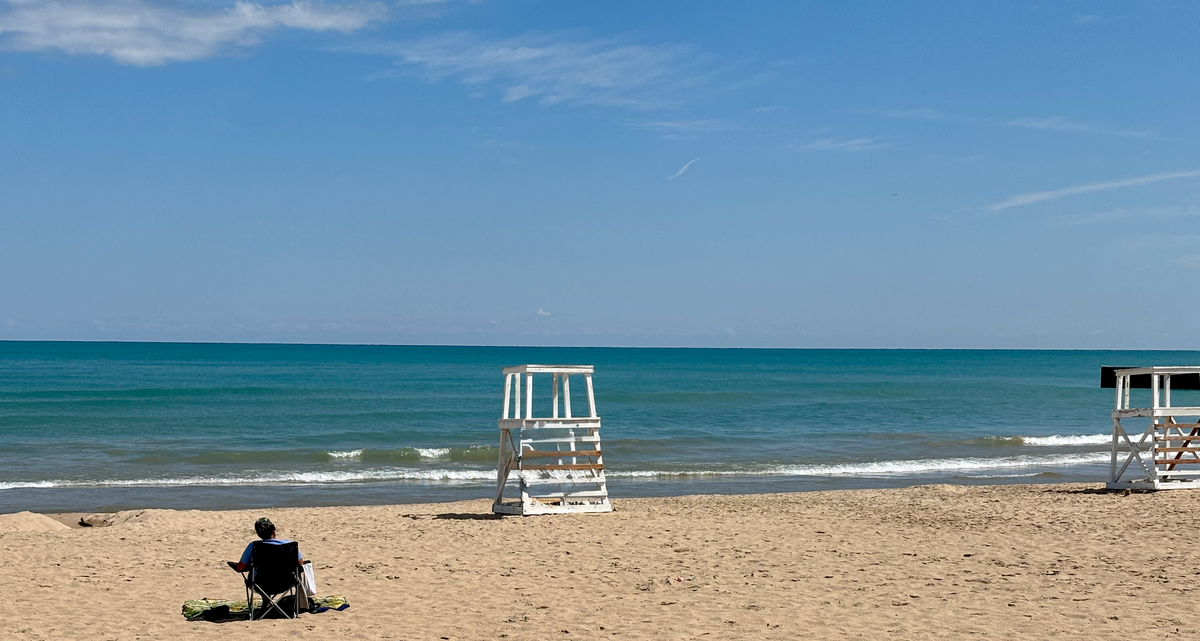
The photographs which accompany these posts are taken by me, and show different settings and views of Evanston (where I live). It is a visual reminder that this is the most important setting for belonging and contributing to community: our neighborhoods, our cities.
Jeff Merrell - Community Listening © 2026 by Jeff Merrell is licensed under CC BY-NC 4.0
Newsletter April 26, 2026